Inflation in India: Why Your Money is Losing Value Every Year
Inflation is silently reducing the value of your money every year. Learn what inflation is, how it affects your savings, salary, SIP, EMI and how you can beat inflation in India.
Economics Shala
Have you ever wondered why the same ₹100 note that once bought you a full meal is no longer enough today?
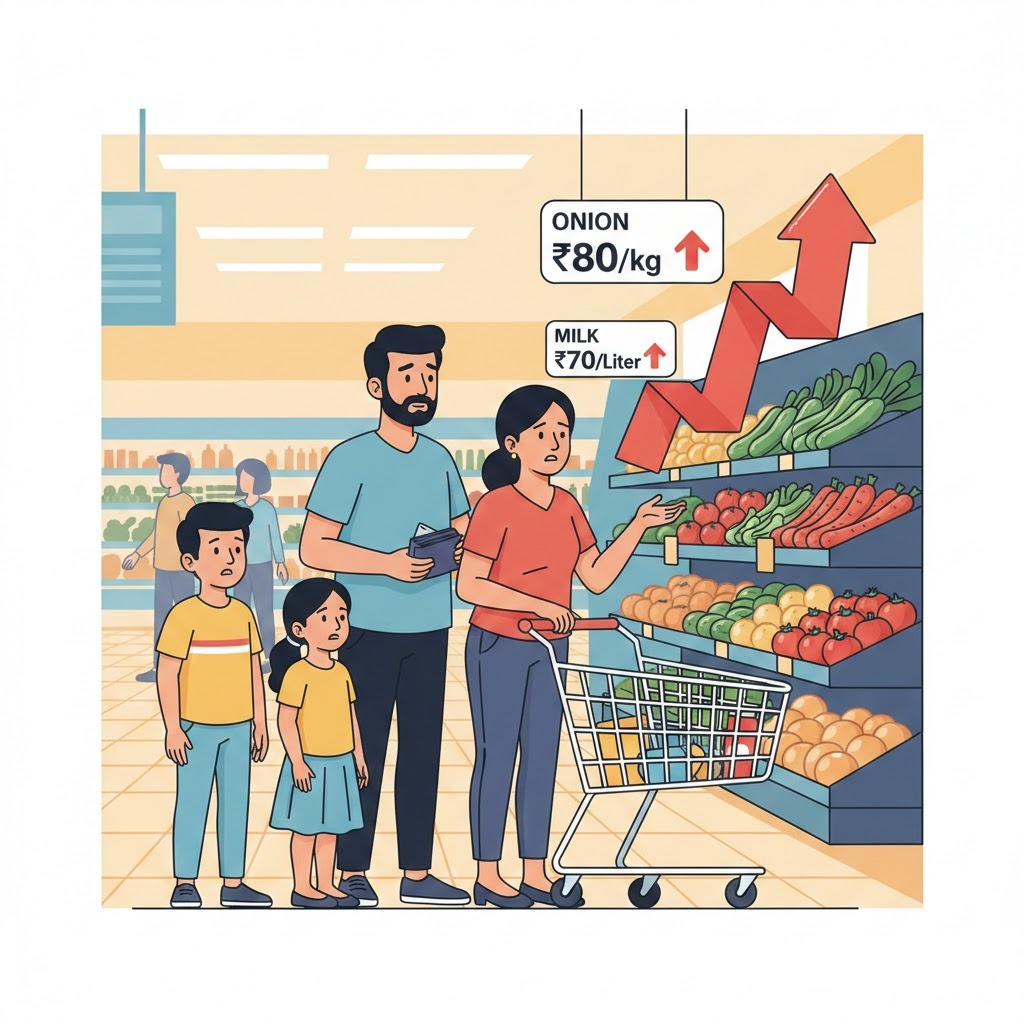
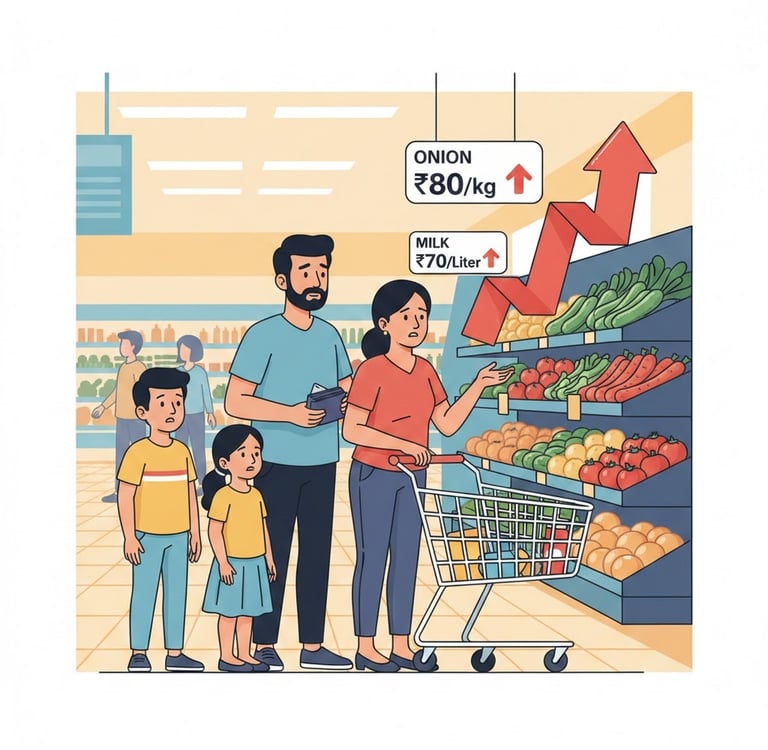
A few years ago, you could easily buy vegetables, milk, or groceries within a limited budget.
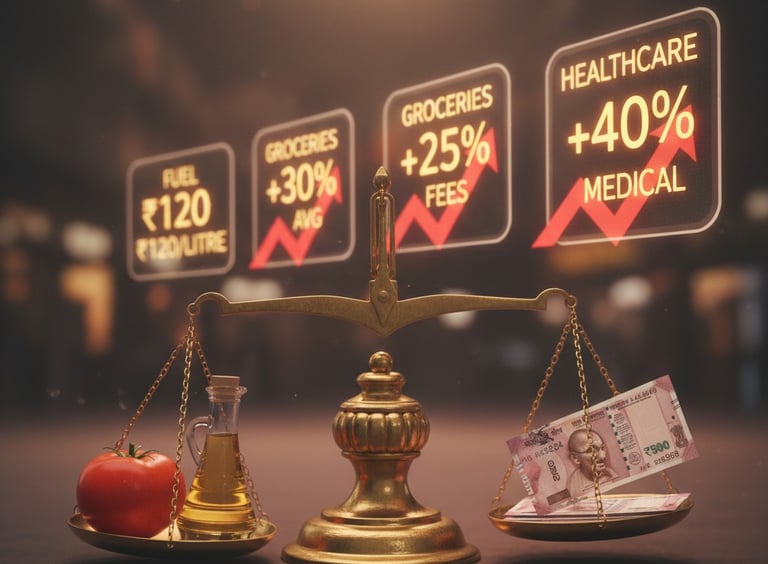
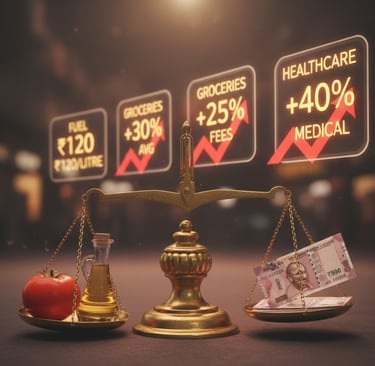
Today, the prices of almost everything have increased — from food items to fuel, education to healthcare.
But has your salary increased at the same rate?
This invisible rise in the prices of goods and services over time is known as Inflation.
What is Inflation?
Inflation simply means a general increase in the prices of goods and services over a period of time.
As inflation rises, the purchasing power of money decreases. In simple words, you will be able to buy fewer goods and services with the same amount of money in the future.
For example:
If today ₹100 can buy you 2 litres of milk, after a few years, the same ₹100 may buy only 1 litre. This means your money has lost its value over time. For instance, 10 years ago in India, petrol prices were around ₹60–₹70 per litre in many states. Today, petrol prices have crossed ₹100 per litre in several cities. This clearly shows how inflation increases the cost of living over time while reducing the value of money.
Why Does Inflation Happen?
There are several reasons behind inflation in an economy:
1. Increase in Demand
When demand for goods and services increases but supply remains limited, prices tend to rise.
2. Increase in Cost of Production
If the cost of raw materials, transportation, or labour increases, companies raise product prices to maintain profit margins.
3. Increase in Money Supply
When more money is circulated in the economy, people tend to spend more, which increases demand and eventually raises prices.
In India, inflation is monitored and controlled by the Reserve Bank of India through various monetary policy tools like Repo Rate.
Effects of Inflation on Your Daily Life
Inflation directly impacts your financial health in many ways:
Your savings lose value over time
Fixed Deposits may fail to beat inflation
Cost of living increases
EMIs may become costlier
Future expenses like education and healthcare become expensive
In daily life, inflation can be seen in rising school fees, increasing house rents, higher medical expenses and even growing electricity bills. A middle-class household that earlier managed monthly expenses within ₹20,000 may now require ₹30,000–₹35,000 to maintain the same lifestyle
We often see people keeping most of their money in savings accounts or Fixed Deposits without realizing that inflation is silently reducing the real value of their hard-earned savings over time.
For example, the price of LPG cylinders in India has increased significantly in the last decade, which directly affects the monthly budget of middle-class families.
Real Rate of Return
To understand the true growth of your investment, you must consider the Real Rate of Return.
Real Rate of Return = Investment Return – Inflation Rate
For example:
If your investment earns 12% annually and inflation is 6%, your real return is only 6%. Many people feel their money is growing safely in Fixed Deposits. However, if inflation is higher than the FD interest rate, the real purchasing power of their savings actually declines over time even though the account balance increases. This is the reason why many financial experts suggest not relying completely on traditional savings instruments like Fixed Deposits for long-term goals such as retirement or children's education.
In my opinion, understanding the real rate of return is essential before choosing any investment option, especially for long-term financial planning.
How to Beat Inflation?
To protect your money from losing its value, it is important to invest in instruments that can generate returns higher than inflation, such as:
Mutual Funds
SIP (Systematic Investment Plan)
Equity Investments
Real Estate
Gold
For example, the cost of higher education in India has increased rapidly over the years. A course that cost ₹5 lakhs a decade ago may cost ₹15–₹20 lakhs today, highlighting the importance of investing in inflation-beating instruments.
These investment options have the potential to provide inflation-beating returns in the long term.
Conclusion
Inflation is not just an economic term; it is a silent factor that continuously reduces the value of your money over time. If your income or investments do not grow faster than inflation, your purchasing power will decline in the future. Therefore, understanding inflation and planning your investments accordingly is essential for achieving long-term financial stability.
Contact
Questions? Reach out anytime.
contact@economicsshala.com
© 2025. All rights reserved.
About us
EconomicsShala is an educational platform dedicated to explaining economics, finance, and public policy in a simple and practical manner.
The goal of EconomicsShala is to make complex economic concepts easy to understand for students, competitive exam aspirants, and everyday readers interested in financial awareness.
We publish simplified explanations of current economic developments, financial concepts, and analytical articles based on publicly available information and reliable sources.
EconomicsShala is independently run and focuses purely on educational and informational content.